4/6/2026 - Week 13 / Meeting 21: Brain Rehabilitation / Abnormal Involuntary Movement
HOOK
Patrick Bet-David and Chase Hughes delve into psychopathy.
10:50 - 20:21
https://youtu.be/hzIlhZbHL38?si=TNjNgWmI19934QTY
Dr. Robert Hare - The Check List
Question 1
Chase Hughes disagrees with Dr. Hare. Explain?
Bystander effect
"Genetics loads the gun, personality and psychology aim experience pulls the trigger." Jim Clemente
FOGing (Fear, Obligation and Gilt)
Research is now consolidating and expanding the evidence-base for dance/movement therapy and the creative arts therapies; understanding the relationship between verbal and nonverbal communication behaviors in the patient-provider relationship; enhancing diagnostic specificity using movement assessments; movement disorders; gesture.
- Understand the concept of brain rehabilitation
- Explain how dance relates to brain rehabilitation
- Gain an awareness of the importance of diagnosing abnormal involuntary movements
- Experience the application of these concepts on a one on one session
2
The most important lesson from 83,000 brain scans | Daniel Amen | TEDxOrangeCoast
Daniel Gregory Amen is an American doctor who practices as a psychiatrist and brain disorder specialist as director of the Amen Clinics. He is a five-times New York Times best-selling author as of 2012. Contrary to psychiatric diagnosis based on bundles of behaviors as opposed to brain scans, Amen uses SPECT imaging for purported diagnostic purposes and brain rehabilitation.
Question 3
What is Amen's main message in his speech about SPECT (Single Photon Emission Computed Tomography)?
3
Question 4
What is the meaning of the acronym ANT according to Amen's definition?
Question 5
What 5 questions you should ask yourself when you experience ANT?
Question 6
According to Amen, how would dance benefit the brain?
6
Activity
Mini-Presentations
After reading the article bellow, students will present on their corresponding section of this article and share with the group the cognitive effects of dance in an experimental way. What does that mean? You will see ...
Article
The Dancing Brain – the cognitive effects of dance
https://www.thelewisfoundation.org/2023/07/the-dancing-brain-the-cognitive-effects-of-dance/
Group 1
Click. The introduction to a piece of music begins, and you feel yourself ready to move, to dance. You feel the rush of endorphins as your body gears up to complete a set of steps, whether you’re at home or in the studio. As you become familiar with the tempo and counts of the music, your entire body engages and prepares to bend, stretch, and simply move. Sometimes your mind is active, visualising the steps you need to perform, while other times it’s ready for the calmness that comes from moving with the flow of the music. Either way, your mind is alive.
This is an experience that all dancers, all people, can relate to. So let’s break it down: how does movement and dance affect the mind and body?
From the Studio to the Brain: Unravelling the Science behind Dance’s Impact on the Mind.
Dance often occupies a less prominent place in our thoughts. It may be viewed as a mere item on our weekly checklist, and occasionally, a spontaneous solo dance party emerges when the irresistibly catchy tunes we use as background music become too infectious to resist. However there is much more to it: dance is one of the few things we can do that activates and integrates the mental, the physical, and the emotional.
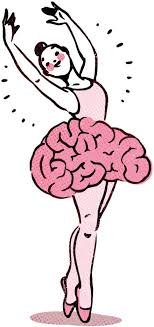 Exploring
the fascinating world of dance reveals a fundamental relationship
between movement and our own being. The study of dancing from a
scientific perspective reveals an intriguing interaction between the
body and the spirit. There is a plethora of evidence concerning the
tremendous effects dancing has on both our physical and mental beings as
a result of the complex interaction between dance and our physical and
mental health.
Exploring
the fascinating world of dance reveals a fundamental relationship
between movement and our own being. The study of dancing from a
scientific perspective reveals an intriguing interaction between the
body and the spirit. There is a plethora of evidence concerning the
tremendous effects dancing has on both our physical and mental beings as
a result of the complex interaction between dance and our physical and
mental health.
This article consists of two parts, providing a concise overview of
the impact of dance on the brain and next time, the body. Let’s begin by
exploring the lesser-considered aspect: the cognitive effects of dance.[Look for a piece a music to illustrate how dance affects the cognition of the brain].
Group 2
The Dance of Neurons: How Dance Rewires the Brain for Improved Cognitive Abilities.
While some imaging studies have identified the brain areas that are stimulated by dance, others have looked at how the emotional and physical aspects of dance affect brain activity. For instance, a lot of the research on the health advantages of dance-related physical activity relates these advantages to the ones linked with physical activity, benefits that vary from memory enhancement to improved neural connections.
Dance may unquestionably boost brain health, according to a 2003 study published in the New England Journal of Medicine by scientists at the Albert Einstein College of Medicine. The study looked at how leisure time activities affected older people’s chance of developing dementia. Only one of the 11 various forms of physical exercise examined—dancing—was shown to reduce individuals’ chance of developing dementia, according to the researchers, who also examined the benefits of cycling, golf, swimming, and tennis. The researchers found that social connection and mental exertion are both involved in dancing, and that this kind of stimulation lowers the risk of dementia.
Researchers at Minot State University in North Dakota discovered that the Latin-inspired dance Zumba enhances mood and several cognitive abilities, including visual recognition and decision-making, in a small study conducted in 2012. Other research demonstrates that dancing lowers stress, boosts serotonin levels, and stimulates the growth of new brain connections, particularly in areas involved in executive function, long-term memory, and spatial awareness.
Dancing is difficult since it calls for synchronisation with the rhythm and the group (if it’s a group performance), coordination of numerous motions, and spatial awareness. Both learning to dance and performing requires the use of several brain areas. For instance, the basal ganglia collaborates with a few other brain areas to coordinate movement, whereas the cerebellum aids in planning fine motor activities. Additionally, the somatosensory cortex contributes to motor control and eye-hand coordination in particular.
Dance courses and performances will push the dancers to use a lot of coordination and mental energy, which will keep their brains active. Due to the numerous motions and physical activity required by dance, this will be important for both their cognitive and general physical development.
Additionally beneficial to social and emotional development are dance
lessons and performances. This is particularly true while dancing in
front of a live audience. Dancers begin to feel at ease in front of an
audience. During lessons, dancers meet new people, learn how to get
along with people of various ages and socioeconomic backgrounds, and
create new friends and contacts.{Look for a music piece used for a dance you feel comfortable with and teach us the dance].
Group 3
Memory in Motion: Dance as a Key to Enhancing Memory and Cognitive Function.
Being a professional dancer requires strong concentration and long, dedicated training sessions; fortunately, any practice is beneficial. No matter if you dance alone or with friends, dancing may help you express yourself and push your brain to new boundaries.
It requires perseverance and diligence to piece together a complicated routine. When a dancer’s performance is broken down into steps, learning happens most effectively. It takes time for the brain to put all the movements together into something that looks smooth and well-coordinated. Dancing teaches the body’s muscles to react more quickly and reliably over time. Even light dancing can help the brain and body work together.
Dancers have highly developed skills for analysing how their bodies are moving in relation to other dancers and their surroundings. Dancers may be confident and precise since every movement is executed with a high degree of accuracy as a consequence. As they learn a routine, they are exercising their memory centres as well as their concentration centres.
 Different
forms of dance knowledge are stored in the brain. Understanding what
dance is, understanding how to dance, and knowing concepts and feelings
through dance all have their respective functions in the brain.
Different
forms of dance knowledge are stored in the brain. Understanding what
dance is, understanding how to dance, and knowing concepts and feelings
through dance all have their respective functions in the brain.
Dancers learn declarative information about concepts, lexicon of
movements, and guidelines for creating dances. The cortex of the brain
is in charge of thinking, language, vision, complex emotions, memory,
attention, controlling dance movement, and creating the mental maps that
make up the mind. Declarative knowledge can be expressed in dance
choreography. Reprocessing and restoration follow memory recall. [Choreograph a short dance routine, learn it and teach it to us].
Group 4
Proprioception capabilities, as well as cognitive abilities and communication strategies – are all examples of procedural knowledge. People actually learn by doing when they dance, which is procedural knowledge.
The brain process changes from a cognitive stage of reflection in learning a technique through observation or description, to acquiring dance-related cognitive abilities. The brain then switches to formulating a strategy for carrying out the skill, and after that, it moves on to a reflexive autonomous stage when the skill becomes automatic, a learned habit, or an unconscious memory. Long-term motor learning, often known as “muscle memory,” is achieved via practice and frees up the brain’s cognitive resources for other tasks.
Working memory, located in the hippocampus of the brain, is where preliminary knowledge is momentarily preserved. ‘Chunking’ is a process by which small individual pieces of a set of information are bound together to create a meaningful whole later on in memory. We may advance from dancing steps, to phrases of steps, to a part of a dance, and into a dazzling thick network, interconnected by all the many patterns we have learnt, thanks to consciousness and chunking.
The hippocampus progressively transfers the majority of the dance
information to the visual or motor system of the cerebral cortex for
long-term storage over the course of a few months. [Put different moves together (one move per group member), put them together in a movement phrase, use the compositional form ABACADA to create a dance]
Group5
The Art of Focus: How Dance Sharpens Discipline and Concentration.
The brain’s capacity is naturally increased by several of dance’s key components. All high-intensity aerobic exercises improve blood flow to the muscles and lungs, but the concentration required for dance training also boosts blood flow to the brain. Higher quantities of oxygen and glucose are excellent for a healthy brain. Additionally, the fast decision-making required for dancing renews and enhances the neural connections that allow the brain to interact with the body’s muscles.
People who dance must coordinate their motions with rhythm and music, which strengthens the mind-body connection. Dancers develop a sharpened sense of focus and present-moment awareness by focusing on the complex synchronisation of steps, body posture, and timing.
Precision and close attention to detail are essential for successful dance performances. Dancers need to pay close attention to details like alignment, posture, timing, and expression. Dancers get a disciplined and laser-focused mentality that can be applied outside of the dance floor to other facets of life by teaching their brains to pay painstaking attention to these factors.
Dancing can induce a “flow state,” which is characterised by intense
focus and immersion in the action. Dancers that reach this condition are
completely immersed in the here and now, giving their best performances
and sharpest focus. Dance can help people achieve this highly
concentrated state of mind because it combines physical activity, focus,
and enjoyment. [Create an aerobic routine or use one you already know and teach it to us].
Group 6
Dance Therapy: Healing through Movement.
Dance therapy is a unique and dynamic form of therapy that harnesses the power of movement and expression to promote healing, self-discovery, and overall well-being. Rooted in the belief that the mind and body are interconnected, dance therapy utilises movement as a means of exploring and addressing emotional, psychological, and physical challenges. This beautiful method of healing is used in prisons, rehab, mental hospitals and more.
Emotional Expression through Motion: Dance as a Therapeutic Outlet.
Numerous studies have shown that dancing has both long and short-term positive effects on mental health by enhancing mood, vigour, and attitude while reducing stress and the risk of depression. Both early development and ageing adults’ brain health can be improved by dance.
People may express themselves via movement through dance, giving them a way to let tension, worry, and other emotional burdens go. Dancers can develop emotional control abilities by participating in a physically and emotionally expressive art form, which also helps them focus by removing distractions and mental clutter.
From an emotional point of view, dance can present a liberating and secure environment for emotional expression via movement. Dancers can overcome challenges by expressing their emotions via the choreography of their performances.
Finding a sense of belonging and community is crucial for teenagers.
People of different ages, ethnicities, and abilities may participate in
dance and discover an accepting environment where they can form
friendships and be themselves. Dance has been shown to have positive
effects as a mental health intervention in prior study.[Think of the main emotions humans are familiar with and ask the class to express them in movement to create a dance].
Group 7
Mental Well-being in Motion: Dance as a Natural Antidepressant and Stress-Reliever.
Dance’s physical motions have also been demonstrated to lower tension, anxiety, and depressive symptoms. Dopamine and endorphins, neurotransmitters that are in charge of sensations of pleasure and happiness, are increased by physical activity.
Dance is a powerful kind of exercise that works your muscles and increases heart rate. By releasing certain brain chemicals during exercise, sadness and anxiety symptoms can be reduced. It also offers a means of escaping persistently unfavourable thoughts and problems.
The premise that when the body feels good, the mind does too is the
basis for the scientific explanation for why dancing has the capacity to
serve as a stress reliever. Stress-relieving neurotransmitters and
endorphins are released during any form of physical activity.
Neurotransmitters are brain molecules that aid in message transmission
throughout the body. The body’s natural painkiller, endorphins also help
to relieve stress and enhance how the mind perceives the outside
environment. Therefore, endorphins make the body feel peaceful and
upbeat following a successful workout. In order to prevent a few
restless nights following dancing, endorphins also help to improve sleep
quality.[Put together dance moves that are relaxing, soothing and calming. Teach them to the group].
Group 8
Reclaiming Confidence: How Dance Boosts Self-Esteem and Body Image.
Dance is a good way to get over your anxiety about feeling awkward. As you learn new moves, acquire confidence, and conquer your fear of the dance floor when you dance for enjoyment, your concern of appearing uncomfortable and having horrible timing gradually fades away.
Dancing is a great way to tone your muscles and improve your mind-body connection, which may help you feel better about yourself and how you look. Regular dancing surely improves self-esteem because it helps people become more conscious of their bodies and increases coordination, flexibility, and body awareness. Better overall wellbeing is a result of greater self-esteem. You have the opportunity to embrace your body as it is and value its unique beauty, movement, and rhythm via dancing.
It encourages you to be fully present, which boosts your self-esteem
by helping you stay grounded and letting go of tension and anxieties. [put together a mini-session in which you mix social dances such as salsa, tango, waltz and hip-hop].
Group 9
The Dance Revolution: Paving the Way for Innovative Approaches to Health and Well-being.
The profound impact of dance on the mind is undeniable. As we have explored throughout this article, dance serves as a catalyst for cognitive growth, emotional expression, and mental well-being. From improving memory and concentration to fostering creativity and emotional release, dance engages the mind in a multitude of ways.
As we immerse ourselves in dance, we become part of a vibrant community. We find solace in shared passion, forge deep connections, and discover a sense of belonging. Through collaboration, support, and celebration, dance brings people together, weaving a beautiful tapestry of diversity and unity.
Let us embrace the power of dance. Allow its rhythms to pulse through our veins, its melodies to awaken our souls, and its movements to unleash the very essence of who we are. With each step, we grow stronger, more confident, and more connected—to ourselves, to others, and to the world around us.
In the grand symphony of life, dance offers a harmonious balance—a sublime marriage of mind and body, artistry and athleticism. So let us dance with abandon, for in its enchanting embrace, we find liberation, expression, and endless possibilities for self-discovery.
I encourage you to take five minutes out of your day today, and host
for yourself a solo dance party. Play your favourite music, and just
move; I guarantee that you will come out of it feeling much better than
you did before.[ Look for some tribal rhythmic dance and create a short dance routine that involves the whole group].


Comments
Post a Comment